


06 Jul 10 Educational Board Games That Actually Teach: Our Family-Tested Favorites
We play board games almost every day in our homeschool, but not JUST for fun. I’ve discovered that the right games can replace worksheets, make math practice feel like playtime, and teach geography better than any textbook we’ve tried.
After playing dozens of games with our first graders, I’ve found 10 educational board games that have changed our homeschool approach.
The best part? They consistently ask to play “just one more game” – and I’m happy to say yes because I know they’re developing critical thinking, math skills, and strategic reasoning while having a blast.
Here are the 10 educational board games that have earned permanent spots on our shelf, why each one works so well for learning families, and exactly what skills your kids will develop with each game.
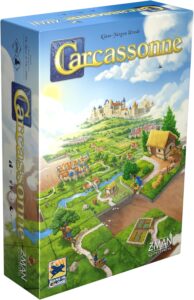 #1: CARCASSONNE – The Strategy Game We Play ALL THE TIME 🏰
Ages: 7+ | Players: 2-5 | Time: 30-45 minutes
Carcassonne Base Game
If I could only recommend one educational board game, this would be it. Carcassonne has become the game our family reaches for most ofCarcassonne Base Game – Amazon Linkten – my husband and I even play after the boys go to bed!
What makes Carcassonne educational gold:
🗺️ Geography & Spatial Learning: Kids learn spatial relationships while building a medieval French countryside. They naturally start understanding how rivers connect, why cities develop near crossroads, and how different landscape features relate to each other.
🧠 Strategic Thinking: Every tile placement requires planning 3-4 moves ahead. Players must consider immediate scoring opportunities while thinking about long-term strategy development.
🔢 Math Integration: Scoring happens organically throughout the game, making addition practice feel natural. Kids count road segments and add city values without realizing they’re doing math.
🏰 History Connections: Discussions about medieval settlements, monasteries, and walled cities happen naturally during gameplay.
Why this works for homeschool families: The learning is completely integrated into engaging gameplay. There’s no forced educational element – kids develop these skills because the game requires strategic thinking and spatial reasoning to play well.
Perfect for: Families wanting a gateway to strategy games that grows with players’ skill development.
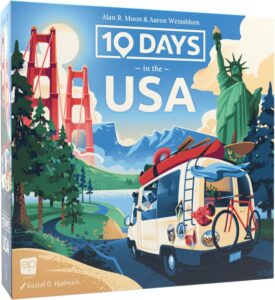 #2: 10 DAYS IN THE USA – Geography Through Adventure Planning 🚂
Ages: 8+ | Players: 2-4 | Time: 30 minutes
10 Days in The USA
This strategic travel planning game will teach more US geography than any map study you attempt. Created by Alan Moon (designer of Ticket to Ride), this game challenges players to plan cross-country adventures using different modes of transportation.
Educational Benefits:
- US Geography Mastery: Kids learn all 50 states and their locations through hands-on gameplay
- Strategic Planning: Planning efficient routes using planes, cars, and walking connections
- Transportation Logic: Understanding how different travel methods connect states
- Route Optimization: Finding the most efficient paths across the country
What makes this special: Players must plan a 10-day journey across America using state cards, colored airplane cards, and car cards. You can travel by foot (bordering states), by car (through connecting states), or by air (matching colored airplane cards).
Homeschool Integration: Perfect for US geography studies, state capital learning, and travel planning discussions. Create real travel itineraries based on game routes!
Perfect for: Families studying US geography or planning actual family road trips across America.
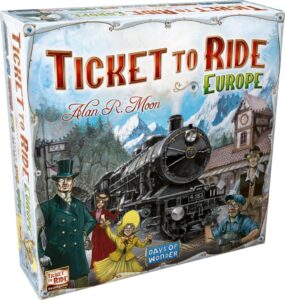 Ticket to Ride Europe – Great companion for world geography studies!
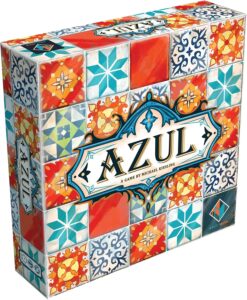 #3: AZUL – Pattern Recognition Meets Art History 🎨
Ages: 8+ | Players: 2-4 | Time: 30-45 minutes
Azul Board Game
This beautiful tile-laying game combines mathematical thinking with art appreciation. The Portuguese tile theme provides natural entry points for cultural discussions.
Educational Benefits:
- Pattern Recognition: Completing tile patterns requires visual-spatial reasoning
- Mathematical Planning: Strategic tile placement involves geometry and spatial math
- Art Appreciation: Beautiful components spark discussions about Portuguese tile art
- Abstract Strategy: Develops logical thinking and forward planning
Why kids love it: The tactile tile pieces and beautiful artwork make this feel like creating art while playing.
Perfect for: Visual learners and families who appreciate beautiful game components.
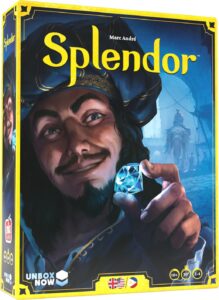 #4: SPLENDOR – Economics and Resource Management 💎
Ages: 10+ | Players: 2-4 | Time: 30 minutes
Splendor Board Game
An excellent introduction to economic thinking and resource management concepts. Kids learn to balance short-term and long-term goals while building their gem-trading empire.
Educational Benefits:
- Economic Principles: Understanding resource scarcity and efficient allocation
- Strategic Planning: Balancing immediate needs with long-term engine building
- Basic Math: Addition and resource counting throughout gameplay
- Pattern Recognition: Identifying optimal card combinations and engine synergies
Homeschool Connection: Perfect for economics and business studies discussions.
Perfect for: Kids ready for more complex strategic thinking and resource management.
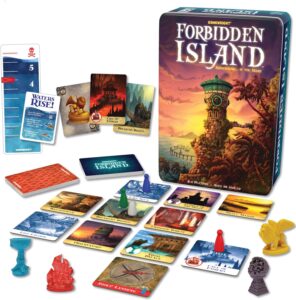 #5: FORBIDDEN ISLAND – Cooperation and Problem-Solving 🏝️
Ages: 10+ | Players: 2-4 | Time: 30 minutes
Forbidden Island
Unlike competitive games, this cooperative adventure teaches kids to work together toward common goals. The pressure of the rising waters creates natural urgency that keeps everyone engaged.
Educational Benefits:
- Cooperative Problem-Solving: Teams must work together or everyone loses
- Strategic Communication: Players must discuss options and plan together
- Risk Assessment: Deciding when to take chances vs. playing it safe
- Logical Reasoning: Analyzing multiple variables to make optimal decisions
Why this works: Teaches teamwork and communication skills while maintaining high engagement through cooperative challenge.
Perfect for: Families wanting to emphasize cooperation over competition.
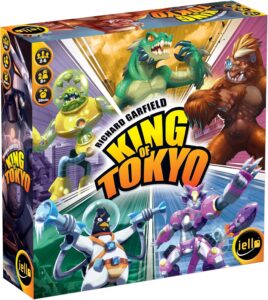 #6: KING OF TOKYO – Probability and Risk Assessment 👹
Ages: 8+ | Players: 2-6 | Time: 30 minutes
King of Tokyo
This dice-rolling monster game teaches probability better than any math worksheet. Kids naturally start calculating odds and making risk-vs-reward decisions.
Educational Benefits:
- Probability and Statistics: Understanding dice combinations and odds
- Risk vs. Reward Decision-Making: When to push your luck vs. play it safe
- Basic Math: Addition and scoring calculations throughout the game
- Strategic Thinking: Balancing multiple paths to victory
High Engagement Factor: The monster theme and exciting dice rolling keeps kids engaged while learning mathematical concepts.
Perfect for: Kids who love action and excitement in their games.
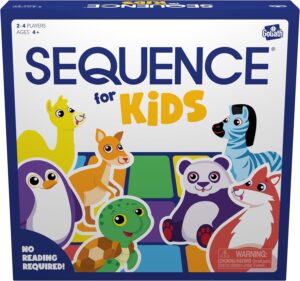 #7: SEQUENCE FOR KIDS – Early Strategy Development 🌈
Ages: 3-6 | Players: 2-4 | Time: 15-30 minutes
Sequence for Kids
Perfect bridge game for younger siblings or kids just starting with strategy games. Teaches pattern recognition and basic strategic thinking without overwhelming complexity.
Educational Benefits:
- Pattern Recognition: Matching animals and creating sequences
- Basic Strategy: Planning moves and blocking opponents
- Turn-Taking: Game etiquette and patience development
- Animal Recognition: Learning different animal names and characteristics
Perfect for: Preschool and early elementary introduction to strategic thinking.
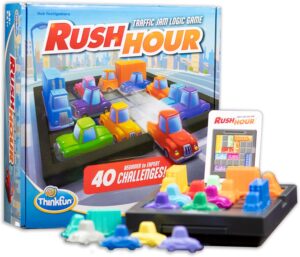 #8: RUSH HOUR – Logic and Spatial Reasoning ⚡
Ages: 8+ | Players: 1 | Time: Variable
Rush Hour Logic Game
Excellent for independent learning time. Progressive difficulty keeps kids challenged without frustration, building logical reasoning skills through spatial puzzles.
Educational Benefits:
- Logic and Deductive Reasoning: Working through sequential steps to solve puzzles
- Spatial Reasoning: Visualizing how pieces move in confined spaces
- Problem-Solving Persistence: Working through increasingly difficult challenges
- Independent Learning: Perfect for quiet time or individual work
Homeschool Use: Excellent for independent work time while you work with other children (or take a coffee break!)
Perfect for: Kids who enjoy puzzles and logical challenges.
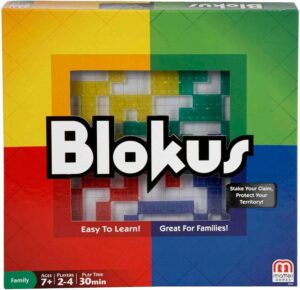 #9: BLOKUS – Geometry and Abstract Thinking 🔷
Ages: 7+ | Players: 2-4 | Time: 30 minutes
Blokus Strategy Game
This abstract strategy game naturally teaches geometric concepts and spatial relationships through engaging gameplay.
Educational Benefits:
- Geometric Shape Recognition: Working with various geometric pieces
- Spatial Visualization: Planning piece placement in confined spaces
- Abstract Strategic Thinking: Developing strategy without thematic elements
- Area and Perimeter Concepts: Understanding space usage and boundaries
Math Connection: Natural geometry practice through hands-on gameplay.
Perfect for: Kids ready for abstract strategic thinking.
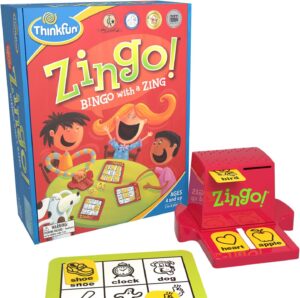 #10: ZINGO – Reading and Vocabulary Building 🎯
Ages: 4+ | Players: 2-8 | Time: 15 minutes
Zingo Word Game
Bingo-style game that makes sight word practice feel like a celebration. Perfect for building reading confidence and vocabulary.
Educational Benefits:
- Sight Word Recognition: Practice with high-frequency reading words
- Vocabulary Building: Expanding word knowledge through gameplay
- Quick Processing: Developing reading speed and recognition
- Reading Confidence: Success in games builds confidence with reading skills
Perfect for: Early readers and sight word practice.
📚 GAMES BY EDUCATIONAL FOCUS
MATH SKILLS:
- Carcassonne: Addition, area calculation, pattern recognition
- King of Tokyo: Probability, statistics, risk assessment
- Splendor: Resource management, addition, economic thinking
- Azul: Pattern completion, spatial math, scoring calculations
GEOGRAPHY & SOCIAL STUDIES:
- 10 Days in The USA: US geography, state locations, travel planning
- Ticket to Ride Europe: European geography, route connections
- Carcassonne: Medieval geography, landscape features, historical context
READING & LANGUAGE:
- Zingo: Sight words, vocabulary building, reading speed
- Any card-based game: Reading comprehension, following written directions
SCIENCE & LOGIC:
- Rush Hour: Logic, spatial reasoning, physics concepts
- Forbidden Island: Scientific method, hypothesis and testing
- King of Tokyo: Statistics and probability concepts
STRATEGY & CRITICAL THINKING:
- All games listed: Various levels of strategic thinking development
- Carcassonne & Azul: Deep strategy for advanced thinkers
- Sequence for Kids: Beginning strategy concepts for younger players
🎯 AGE-BASED RECOMMENDATIONS
AGES 3-6 (EARLY LEARNING):
- Sequence for Kids – Pattern recognition and basic strategy
- Zingo – Reading and vocabulary building
- Simple matching games leading to more complex strategy options
AGES 7-10 (ELEMENTARY STRATEGY):
- Carcassonne – Gateway to deeper strategy games
- 10 Days in The USA – US geography with manageable complexity
- Blokus – Abstract thinking and geometry
- Azul – Visual patterns and planning
AGES 10+ (ADVANCED LEARNING):
- Splendor – Economic concepts and resource management
- Forbidden Island – Cooperative strategy and problem-solving
- King of Tokyo – Probability and risk assessment
- Rush Hour – Advanced logic and spatial reasoning
💡 HOMESCHOOL INTEGRATION IDEAS
CURRICULUM CONNECTIONS:
Math Integration:
- Use game scoring for additional math practice
- Create graphs tracking game performance over time
- Calculate probabilities in dice and card games
- Measure game components for geometry practice
Geography Extensions:
- Research locations featured in 10 Days in The USA travel routes
- Plan real family road trips using game strategies
- Create maps inspired by Carcassonne landscapes
- Study cultures represented in various game themes
Language Arts:
- Write game reviews and strategy guides
- Create stories based on game themes and outcomes
- Practice vocabulary from game instructions and themes
- Compare and contrast different games and strategies
Science Connections:
- Study probability through dice and card games
- Explore engineering through spatial reasoning games
- Discuss cooperation vs. competition in nature (cooperative games)
🛒 BUILDING YOUR EDUCATIONAL GAME COLLECTION
STARTER COLLECTION (3 games – ~$100):
- Carcassonne – Core strategy and multiple learning areas
- 10 Days in The USA – US geography and travel planning
- Zingo or Sequence for Kids – Early learner option
Total investment: Around $100 for hundreds of hours of educational entertainment
EXPANDED COLLECTION (Add 3 more):
- Azul – Visual-spatial learning
- King of Tokyo – Math and probability
- Forbidden Island – Cooperative problem-solving
COMPLETE COLLECTION (Final additions):
- Splendor – Economic thinking
- Blokus – Geometry and abstract thinking
- Rush Hour – Individual logic practice
🎮 WHY THESE GAMES WORK FOR HOMESCHOOL FAMILIES
AUTHENTIC LEARNING:
These games teach naturally through gameplay rather than forced educational elements. Kids develop skills because they’re necessary for playing well, not because someone told them they should learn.
ENGAGEMENT THAT COMPETES WITH SCREENS:
Every game on this list consistently holds our boys’ attention for 30+ minutes.
SKILLS THAT TRANSFER:
The strategic thinking, mathematical reasoning, and problem-solving skills developed through these games directly transfer to academic work and real-life situations.
FAMILY BONDING WITH PURPOSE:
Unlike many “educational” activities that feel like work, these games create genuine family bonding time while building essential skills.
SCALABLE DIFFICULTY:
Most of these games grow with your children. Beginning players can enjoy basic gameplay while advanced players develop deeper strategic thinking.
📈 THE REAL TEST: LONG-TERM IMPACT
After months of regular gameplay with these educational board games, here’s what we’ve observed:
ACADEMIC IMPROVEMENTS:
- Better planning skills in writing assignments
- Improved spatial reasoning in math concepts
- Enhanced pattern recognition in reading
- Stronger strategic thinking across all subjects
LIFE SKILLS DEVELOPMENT:
- Gracious competition and good sportsmanship
- Decision-making confidence and accepting outcomes
- Patience with complex tasks and challenging mental work
- Collaborative problem-solving and communication skills
FAMILY DYNAMICS:
- Genuine family time that everyone actively chooses
- Natural conversation starters about strategy and planning
- Shared vocabulary for discussing decision-making
- Positive associations with challenging intellectual work
🚀 GETTING STARTED TODAY
If you’re ready to transform family game night into powerful educational time, start with Carcassonne. It’s the perfect gateway game that introduces strategic thinking while remaining accessible to elementary-age children.
For families just beginning: Choose 2-3 games from different categories (strategy, geography, early learning) to see what resonates with your children.
For experienced game families: Consider the more complex options like Splendor or Forbidden Island to challenge developing strategic thinking skills.
Remember: The best educational games are the ones your family actually wants to play. Focus on fun first, and the learning will follow naturally.
Want more homeschool resources and family activity ideas? Subscribe to our newsletter for weekly educational adventures and honest reviews of learning materials that actually work for real families.
Affiliate Disclosure: This post contains affiliate links. I may earn a small commission if you purchase through these links at no additional cost to you. This helps support our family’s educational adventures and allows me to continue sharing honest reviews of products we actually use and love!
No Comments